Blog Archives
My Oracle Support – Day 2
Is Emperor actually naked?
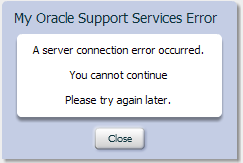
At this point in a fairy tale a child in the crowd calls out……[you know what :-)]. I sincerely hope in happy ending of this tale. Can’t help but not to agree with Daniel Fink on this one.
My Oracle Support – Day 1
For better or worse Oracle finally retired old Metalink in favor of flashy “My Oracle Support”. Time will tell how well will Emperor’s New Clothes serve us. Today, I got stuck twice during the log on attempt, usually close at the end:

Click on Firefox reload page button did the trick. I guess this is partly due to techies around the World testing the new “Metalink”, I expect that things will settle in the next couple of weeks. One particular corner that I was skeptic in the past was Oracle Community. Mostly because I found “old” Metalink Forum engine that was underneath at the time and which didn’t allow us to use fixed font. This is — in not so humble opinion — a must have feature for posting technical content on the web, otherwise code samples are hard to read/follow.
So, this time around I clicked Community from the Menu and clicked on “Enter my Oracle Support Community” …

…then I opened some thread and eagerly clicked on reply…and yes, finally it’s here, a toolbar that allows us to pick fixed sized font:

How little it takes to make an old grumpy DBA a happy camper :-)
My Hero
I consider myself as a rather conservative cell phone user (heck *any* phone for that matter). Admittedly, the cell phone has become an essential tool in our daily lives, no question about that. It’s just that cell phones as much as they’re essentials, are one of the most abused technologies nowadays. That’s why I sparingly give away my phone number and even more sparingly answer unknown calls.
My monthly cell phone usage profile usually looks like this:
– total of 30 minutes per month of voice conversation,
– an average phone call with me will last about 15 seconds
– send (at most) a handful of SMS messages,
– receiving (undisclosed:) amount of important messages. And these alerts are the main reason I’m constantly carrying “Tamagotchi” with me.
– until recently I didn’t have any need for a regular data exchange over mobile phone (and roaming prices for data usage outside the home country anywhere in EU looks like a robbery to me), so data was not part of my monthly plan with mobile provider.
If you look at my profile you’ll notice that I’m basically using phone more or less as an old fashioned pager. And what about my ownership history?
I bought my first mobile phone in November 1998 (Nokia 5110), which served me well until December 2004, when I replaced the “brick” with the sleek Motorola Razor V3, which was recently replaced with my first “smart phone”, HTC Hero. From the day I first read about the Google plan to enter the smart phone market with the Linux based Android I was waiting for appropriate phone to hit the market and my wait finally paid off.
Before I settled to buy android based phone, I knew what I don’t want to buy: Windows Mobile (because the last thing I need is another Windows based device to fiddle with) and Apple iPhone (because of the corporate attitude towards customers and developers, trying to lock them to their pretty silos, thank you Apple, but I don’t want to rotten there, no matter how much effort you put to prettify your UI.). The only alternative that I saw for the Android was Symbian based phone from Samsung. My search for the right android phone ended when I found many positive reviews on the net and various introduction videos for HTC Hero on the Youtube; so shelling out 580€ for my Hero with 16GB microSD card and a nice leather belt case didn’t hurt too much. :-)
I’m still learning to handle this puppy and every day I discover something new. The Teflon coating of the phone makes a pleasant touch, as opposed to iPhone or some Nokia phones that I had in hand. HTC Sense works flawlessly with HTC Hero multi-touch screen, the user interface is based on widgets and it’s simple and intuitive, with tons of free applications available for the phone. Of course we can find much of the android functionality on other platforms as well. What differentiate android from the crowd is the fact that “hacking spirit” is part of the foundation from day one. Compare that with the boring Windows Mobile, or iPhone for that matter. Not only that it’s fun to use android, it must be fun to develop and hack the phone OS and applications.
At start I was a bit skeptical to give away part of my freedom, after-all I was always proud on my conservative cell phone usage, but after a day or two with my Hero, I was hooked to all the “smart” options that worked for me, not against me. I love the way how easy and well are Gmail, GCalendar and Google talk integrated with the phone. I love the idea that I can easily replace several USB keys with storage on Hero, that I can safely carry around sensitive information thanks to android port of KeePass and free B-Folders, not to mention several free English dictionaries and pdf e-books. Another feature that will come handy is using HTC Hero as USB modem for my Dell laptop. Setting up driver on Windows XP was as easy as:
1) downloaded and installed the latest (2.0.4 at time of this writing) HTC Hero Sync software, see [3]
2) connected HTC Hero to laptop with USB cable
3) on Hero I opened “Menu”, “Settings”, “Wireless Controls” and turned on “Mobile network sharing”
4) at this point Windows XP recognized and installed new driver that will show as a new NIC, “HTC Remote NDIS based device”

we will be notified about the new connection with impressive speed :)

which is of course speed of the USB 2.0 connected device, not 3G network, and a quick ipconfig will show us:
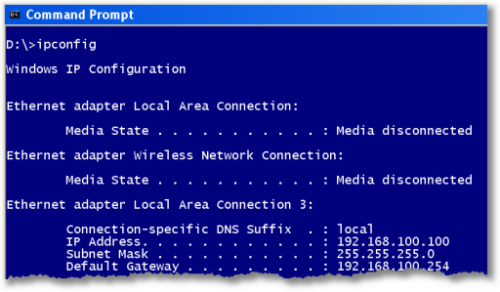
Tested the connection with my VPN client and RDP session worked decently.
So far I spotted only two weaknesses of this phone:
- daily “feeding” is almost unavoidable, unless you turn off data and work in plain old GSM mode
- WiFi (WPA2) connection to my home based Linksys WRT54GL router is troublesome and unreliable. Based on what I found on the net I’m not alone. HTC will have to patch this puppy.
Overall, I can say that I’m a happy camper so far and I’m really impressed with what HTC delivered. It’ll keep me busy for the next few weeks, which is unusual because most of the time my gadgets come and go in a day or two.
Some useful references that I found on the net so far:
[1] Android SDK
[2] Using DDMS to take screenshots from HTC phone (among other things)
[3] HTC Sync Upgrade for Hero
[4] Applications for Android
[5] Testing Android user interface with Live CD
SIOUG 2009
Next week I will attend 14 th SIOUG conference, again at my beloved place, Portorož . This year I managed to put up itinerary for all three days, after all — namely my first thought was that because of the lack of interesting morning sessions (apart from Steven Feuerstein on Wednesday) it’s only the last day of the conference that’s really worth attending. But that would be a pity, because I would miss sessions from Christian Antognini and Anjo Kolk.
So here it is, my three day itinerary for SIOUG 2009:
Monday, September 21
- Peter Kestner, “The Myth of hacking Oracle”
- Christian Antognini, “Interpreting Execution Plans” — (an opportunity to get an autograph for his book).
- Randolph Geist, “CBO fundamentals: Understanding the different modes of System Statistics”
- Lovro Vreš, “Zaščita podatkov v Oracle podatkovnih bazah” (Protection of data in Oracle database)
- Piet de Visser, “How to prevent double work”
- Christian Antognini, “Parallel processing”
Tuesday, September 22
- Jurij Jaklič, “Pot do zrele poslovne inteligence: Pripravljenost in dejavniki uspeha”
- Craig Stewart, “Oracle Data Integrator Enterprise Edition for Business Intelligence”
- Anjo Kolk, “7 Levels of Application Efficiency”
- Marko Borovnik, “Ali je mogoče že sam SQL dovolj za DW in BI”
- Piet de Visser, “Get your stats right: Guide CBO to go where you want it”
- Anjo Kolk, “Why the Middle Tier is Slowing Down the Database?”
- Zmago Žagar, “Obvladovanje meteoroloških procesov”
Wednesday, September 23
- Steven Feuerstein,”Coding Therapy for Software Developers”
- Steven Feuerstein,”Automated testing options for Oracle PL/SQL
- Jože Senegačnik,”Kako napisati dobro PL/SQL kodo?” (How to write good PL/SQL code?”)
- Jože Senegačnik,”RMAN v praksi”
- Boris Oblak, “RMAN: namigi in nasveti”
- Miha Peternel,”Izkušnje pri delu z XML datotekami v Oracle bazi”
- Aleš Okorn, “Vojna svetov ali kam s podatkovno logiko”
- Robert Korošec, “OLAP11g kot zamenjava za materializirane poglede”
I was pleasantly surprised that SIOUG introduced cheaper conference pass this year (thank you, Miss Recession!), that excludes social event and lunches; which, of course, I gladly took .
Riding the cloud
I’m still fresh from yesterday second VMware mini-conference in Slovenia. Arguably it’s the largest event dedicated to virtualization in Slovenia (but don’t be fooled by that, we could probably hardly fill an average Irish pub in your corner of the World).
Before I continue, don’t get me wrong, I’m a big fan of VMWare products since day one. What bothers me is how easily our branch produces tons of acronyms, buzzwords and other fluffy words to promote “new” technology to us, tired, old consumers. We all know one such notorious hot buzzword was Web 2.0. I was told, not that long ago, how Web 2.0 is the next big thing that will change our lives. You can either join us or die as a dinosaur. No one could really explain to me what exactly Web 2.0 is or when we’ll see Web 3.0. A few years later (I hope), most of us are aware (ok, with the exception of most executive managers) that Web 2.0 as such doesn’t exist, never did, never will. It’s (was) just another buzzword to easy promotion and selling of some pretty much “old and boring” acronyms (such as Ajax, RSS, WS, SOA, Wiki, blogging, Tagging, podcast, mash-ups, “social” web, etc.), it’s much easier to pack everything in one big bag called Web 2.0, doesn’t it? Rarely people understood what lies behind Web 2.0, but it surely sounded cool to be able to discuss Web 2.0 at cocktail parties during IT conferences session breaks.
Roll forward…today Web 2.0 is a cold turkey (if you don’t believe me, I recommend reading a nice column written by Lance Ulanoff), our branch needed another buzzword to ride on. Welcome to cloud computing. It was just a matter of time when someone will go over the top and announce cloud Operating System (or cloud OS). VMWare did that when they announce the industry first cloud operating system. vSphere (successor of VMWare VI3) is the next big thing. New software category. Some bloggers went even further, calling vSphere a software mainframe. I’m not arguing if this is justifiable or not, neither I’m denying VMWare innovation effort and progress on the field of virtualization. Kudos to them! They’re kings of the hill, a clear industry leader. But, do we really need another frenzy buzzword polka in our industry?
I can vividly imagine Steve choking with the muffin at the breakfast, while browsing the press and seeing VMWare announcement…: WTF!? How come they’re first on the market? How come we didn’t see it first!? A hole new software category! Billions of new opportunities. Green ones! Hmm…could we call it Cloudy Windows 7 or at least bring back that trendy default desktop background picture from Windows XP!?

 dbaportal.eu
You must be logged in to post a comment.